Lodge
cooper landing, Alaska
Alaska Wildland Adventures
4.9(402 · TripAdvisor)
Est. 1977
All-inclusive packagesGourmet meals includedProfessional fishing guidesRoundtrip Anchorage transportation+4 more
$295–$450/person
View full details →Port Guide
Where the Kenai River begins: turquoise water, drift boats, and the Russian River reds.
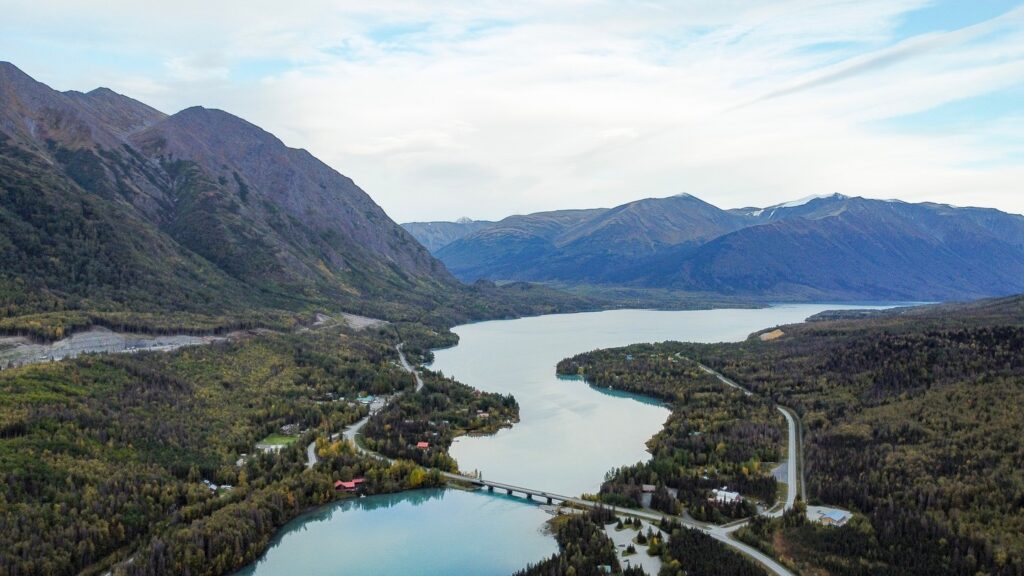
Cooper Landing sits about 100 miles south of Anchorage, roughly a two-hour drive, at the spot where Kenai Lake empties into the Kenai River. The water here runs a startling blue-green from suspended glacial silt, and the little community stretches about eight miles along the Sterling Highway between a mountainside and the river. This is the upper Kenai: all 18 miles of it are drift-only by regulation, no motors, which makes for a very different day than the powerboat fishery downriver around Soldotna.
Two fisheries define the town. The first is the Russian River confluence, a few miles downstream, where a foot-passenger ferry carries anglers across the Kenai to what is often called the busiest 'combat fishing' spot in Alaska. When the sockeye run is in, expect to fish within a rod's length of your neighbors. The second is the drift-boat fishery itself: guides row anglers through the Kenai National Wildlife Refuge and Chugach National Forest for sockeye and coho salmon, Dolly Varden, and the upper river's famously large rainbow trout.
Because Cooper Landing is a river town, the halibut and combo packages sold by local lodges are day trips arranged out of saltwater ports; Seward and Homer are each within about a two-hour drive. Many visitors base here for the river and add one saltwater day.
| Species | Prime Months | Notes |
|---|---|---|
| Sockeye salmon | Jun–Aug | The signature fishery. Early run fishes well from mid-June near the Russian River confluence; the late run follows in mid-July. Mostly bank and wade fishing with flies. Regulations at the confluence are specific and posted on site. |
| Rainbow trout | Jun–Oct | The upper Kenai is known for large wild rainbows taken from drift boats on fly gear. Catch-and-release handling is the local norm and regulations are conservative. |
| Dolly Varden | Jun–Oct | Abundant alongside the rainbows, keying on salmon eggs from midsummer on. Same drift-boat, fly-fishing program. |
| Coho (silver) salmon | Aug–Sep | A strong late-summer target on the upper river from drift boats and the bank as sockeye taper off. |
| Pacific halibut | May–Sep | Not caught here; Cooper Landing lodges arrange saltwater halibut days out of Seward or Homer, each roughly two hours away. Charter halibut size and bag rules change annually. |
| King (chinook) salmon | Limited | Kings are not the Cooper Landing fishery; king fishing on the upper Kenai is closed or heavily restricted to protect spawners. Anglers set on a king should look downriver or to saltwater. |
Seasons and limits change — always confirm current regulations with ADF&G before booking.
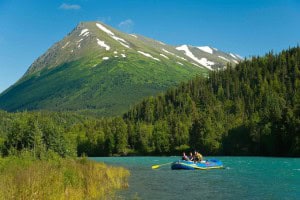
Guided trips here are drift trips: because the entire 18-mile upper Kenai is a no-motor zone, guides launch drift boats near Kenai Lake and row downstream through refuge and national forest land, typically as half-day or full-day floats. Boats are small, a few anglers per guide, and fly fishing is the dominant method for trout and Dollies, with sockeye taken on flies along the banks. Guides provide the boat, rods, and tackle; bring your own waders (some outfits rent them, so ask when booking).
You don't need a guide for sockeye. The Russian River Ferry carries foot anglers across the Kenai to the confluence fishery, and Forest Service trails and stairways line the bank. It runs shoulder-to-shoulder when the run peaks, the famous combat fishing, and it's remarkably productive once you learn the flossing-style presentation everyone around you is using.
Cooper Landing is one of the easier Alaska fishing towns to reach: drive the Seward Highway south from Anchorage, then turn onto the Sterling Highway, about 100 miles and two hours total, one of the more scenic drives in the state. The town has lodging from riverside lodges to campgrounds, plus food and a grocery, strung along the highway. No air service is needed or available locally; rent a car in Anchorage. Seward and Homer are each about two hours away for saltwater add-on days.
Yes. Nonresident Alaska licenses cost $30 for a single day or $145 annual, available online from ADF&G and at local retailers. A king salmon stamp is only needed if you target kings, which is generally not the Cooper Landing program.
Yes. The sockeye fishery at the Russian River confluence is a walk-and-wade fishery reached by the Russian River Ferry and bank trails, and it's very much do-it-yourself. Guides earn their fee on drift-boat trips for rainbow trout, Dolly Varden, and silvers, where the boat and local knowledge matter.
The local name for the shoulder-to-shoulder sockeye fishing at the Russian River confluence: when the run peaks, anglers line the bank a few feet apart. It's crowded but productive, and orderly once you match the rhythm of the people around you. If you want solitude, book a drift trip instead.
Not from town: Cooper Landing is a river community with no saltwater access. Local lodges commonly arrange halibut charters out of Seward or Homer, each about a two-hour drive, and many visitors do one saltwater day mid-trip.
Two waves: the early run fishes well from roughly June 15 through early July, and the late run arrives from mid-July into early August. Exact openings, bag limits, and sanctuary boundaries change by emergency order.
cooper landing, Alaska
cooper landing, Alaska
cooper landing, Alaska