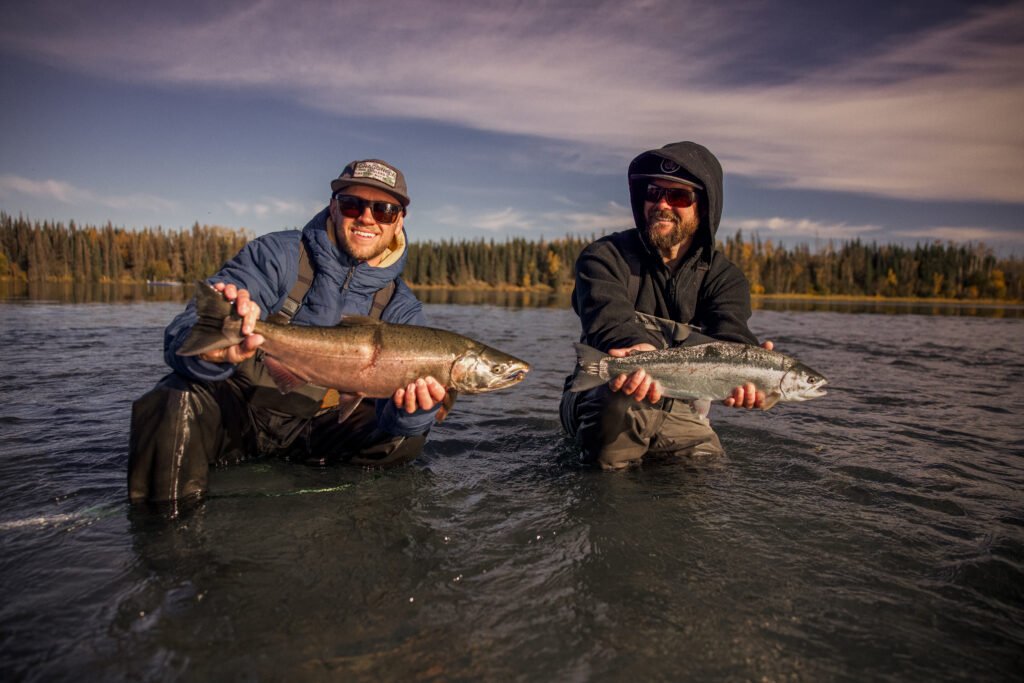
The Kasilof River is the Kenai's smaller, quieter neighbor, a glacial river draining Tustumena Lake and fished from drift boats rather than powerboats. Its claim to fame right now is kings. With the Kenai closed to king salmon fishing in recent seasons, the Kasilof's hatchery-supported run tied to Crooked Creek has become one of the last places in Southcentral Alaska where you can still legally target and keep a king salmon. Sockeye and silvers round out a season that runs from mid-May into fall.
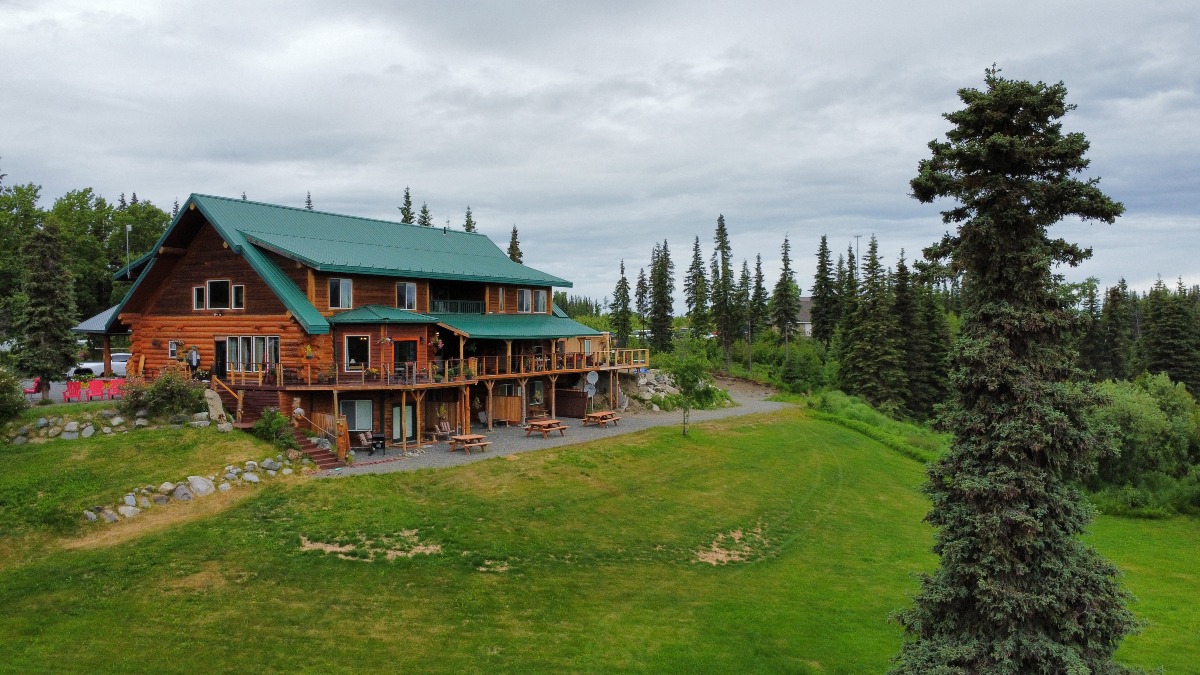
The main river is a drift-only fishery, no power boats allowed, which keeps the experience noticeably calmer than the lower Kenai. Guides row, anglers fish, and bank anglers do well too, especially around the Crooked Creek confluence and state recreation site. Around 12 operators guide the Kasilof, including Mark Glassmaker Fishing Alaska, Crooked Creek Retreat & Outfitters, D's Fishing Company, and Crooked Creek Guide Service.
The salmon fishery in Kasilof
Kings arrive first. The early run shows up mid-to-late May and continues through mid-to-late June, a mix of wild and hatchery fish, with the hatchery component produced from early-run wild fish returning to Crooked Creek. The sweet spot is typically the last week of May through the first two to three weeks of June. Regulations here are strict and protective. Under recent rules, only hatchery-produced kings (identified by a healed adipose fin-clip scar) may be kept; wild kings with an intact adipose fin must be released immediately, and gear has been restricted to one unbaited, single-hook artificial lure. These rules are set by emergency order and change, so confirm the current ones with ADF&G before you fish. A King Salmon Stamp is required on top of your license when targeting kings.
Sockeye begin entering the river around June 15 and run through July, with peak fishing roughly July 10–25. Silvers arrive in early August and fish well into September; peak action is commonly cited from about August 10 through mid-September. A resident-only personal-use dipnet fishery also runs near the river mouth (recently June 25 – August 7, no kings allowed). Visitors can't dipnet, but it's part of the scene you'll see.
Timing your Kasilof salmon trip
The Kasilof offers one of Southcentral's earliest river salmon trips, with late-May king fishing underway before much of the region has started, and one of its latest, with silvers running into September. If a king on a drift boat is the goal, book late May through mid-June. For a fish-for-the-freezer sockeye trip, mid-July is the play. Silver anglers get the river largely to themselves from mid-August on.
A day on the drift boat
A guided Kasilof day means a drift boat: launch upstream, row and fish your way down, and take out at a lower landing. Because motors aren't part of the main-river fishery, guides work the water hard, backtrolling and side-drifting for kings and using short-line techniques for sockeye that anyone who's fished the Kenai will recognize. Bank fishing is genuinely productive here too, particularly for sockeye and around the Crooked Creek area for kings.
Guides supply rods, tackle, and bait where legal. A nonresident fishing license runs $30/day or $145/year.