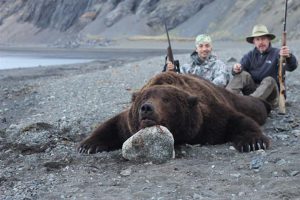
Anchorage is the staging point for most black bear hunts in Southcentral Alaska rather than the hunting ground itself. Hunters fly in, gear up, and then either fly out to remote camps west of Cook Inlet and in the mountains, or drive an hour to Whittier and run a boat into Prince William Sound. The Alaska Department of Fish and Game estimates roughly 100,000 black bears statewide, and Southcentral holds strong numbers of them.
Black bear is also one of the few big-game animals a nonresident can hunt in Alaska without hiring a registered guide. The guide requirement applies to brown/grizzly bear, Dall sheep, and mountain goat, not black bear. That makes it a popular first Alaska hunt, though many visitors still book an outfitter or transporter for the logistics. Confirm current license, tag, and permit requirements with ADF&G before you book.
Black bear hunting from Anchorage
Two styles dominate. Fly-out hunts leave Anchorage or nearby airstrips by small plane for remote country, and several Anchorage-based outfitters run spring and fall camps this way. Boat-based hunts work the coastline of Prince William Sound (Unit 6D), reached through Whittier via the tunnel about an hour from town: hunters glass beaches and sedge flats from the water, then go ashore to stalk. Note that shooting black bears from boats is illegal in Unit 6D. Expect a beach landing and a stalk on foot.
Closer to town, Unit 14C covers the Anchorage area itself, with a long general season, but the Anchorage Management Area carries its own restrictions and much of the nearby country is Chugach State Park with special rules. Most visiting hunters skip the local complications and book a fly-out or Sound hunt instead.
Seasons and timing
Spring is the main event. In Prince William Sound, ADF&G notes that hunts concentrate on bears feeding along coastal sedge flats, and the department recommends scheduling earlier in May, before recreational boaters flood the Sound over Memorial Day weekend. Operators report the bulk of the black bear harvest coming in spring, when hides are prime and daylight stretches late into the evening. Fall hunts run in September and October, often combined with other species. Unit 14C's general season has run roughly September 1 through May 31 with a one-bear limit in the Anchorage Management Area, but seasons and limits change, so verify current dates with ADF&G.
What a spring hunt looks like
A typical spring boat hunt runs several days of cruising shoreline, glassing, and stalking; groups commonly see multiple bears a day when conditions are right. Spring black bears typically weigh in the neighborhood of 180–200 pounds per ADF&G, with fall bears heavier. Paperwork matters: Prince William Sound's Unit 6D black bear hunt is a registration hunt with a harvest cap, so hunters report kills within three days, and hides and skulls from Southcentral units must be sealed by ADF&G within 30 days.