anchorage, Alaska
Revelation Mountain Outfitters
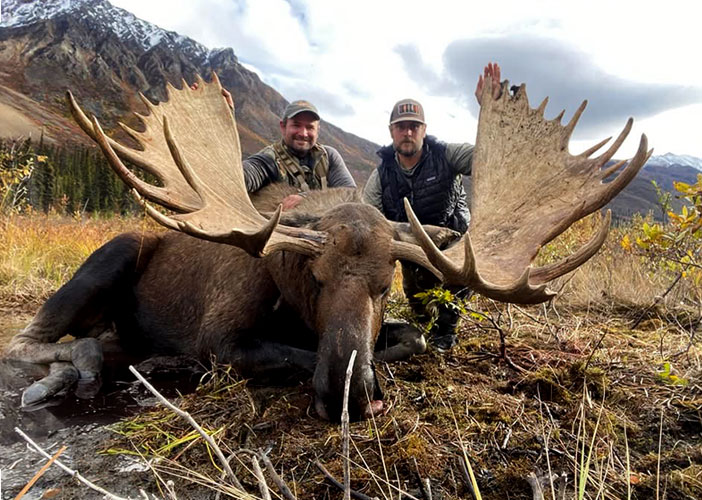
Master Guide Tony Dingess runs fair-chase brown bear, Dall sheep, and moose hunts from the Alaska Peninsula to the western Alaska Range.
View full details →Species Guide
Anchorage is the staging point. The moose are a bush flight away.
Nobody shoots a trophy bull inside Anchorage city limits, but Anchorage is where most visiting moose hunters start and end their trip. It's the air hub where you meet your outfitter or air taxi, buy last-minute gear, and, if things go well, ship home a very large amount of meat. The hunts themselves happen a bush flight away: remote drainages and river country reached by floatplane or wheeled aircraft, where operators run drop camps and guided camps through September.
Moose is one of Alaska's do-it-yourself-legal species: nonresidents are not required to hire a guide for moose, since guides are mandatory only for brown/grizzly bear, Dall sheep, and mountain goat. That opens three trip styles at very different price points: transporter drop camps, outfitted camps, and fully guided hunts. Around 13 operators run moose hunts staged from the Anchorage area, including Revelation Mountain Outfitters, Ultimate Alaskan Adventures, and JD's Kniktuk Outfitters.
The standard nonresident bag limit is one bull with antlers at least 50 inches wide or carrying 4 or more brow tines, the legal-bull judgment call that defines Alaska moose hunting. Season dates and antler rules vary by game management unit and change, so confirm current regulations for your specific unit with ADF&G.
Trip style drives cost. A transporter flies you and your gear to a drop camp and picks you up; the hunting is entirely on you. Guided hunts add a licensed guide, camp staff, and typically much better odds. Costs vary widely: unguided fly-out hunts commonly start around the price of a used truck, guided hunts run well into five figures ($10,000–$15,000 is a commonly cited starting range, with premium hunts higher), and a successful kill usually means paying for extra flights. Operators repeatedly cite figures around $3,500–$4,000 for flying meat out of the bush.
Moose season is a September story. Many units run seasons in the September 5–25 window, and fly-out drop-camp programs commonly operate from late August through the end of September. The rut begins building around September 8 and intensifies through the month. As bulls turn vocal and responsive to calling, late-September dates become the most sought after. Book early; the rut window is finite, and every operator's calendar fills around it.
A typical fly-out hunt runs about 10 days including weather buffers: fly from Anchorage to a lake or gravel bar, set camp, and hunt by glassing and calling. Weather delays are normal on both ends, so build slack into your Anchorage flights. If you kill a bull, the real work starts. Alaska law makes salvaging all edible meat the hunter's legal responsibility, not the transporter's, and a mature bull produces several loads of meat that must be packed and flown out.
For paperwork, plan on a nonresident hunting license (around $160) plus a nonresident moose locking tag; note that tag fees are separate from any operator costs. Bring serious rain gear and broken-in boots, because September in moose country is wet.
| Period | What's happening | Notes |
|---|---|---|
| Late August | Earliest fly-out camps begin in some units | Drop-camp programs commonly run Aug 20 – Sep 30; bulls not yet rutting |
| September 5–15 | General seasons open across many units | Rut begins building around Sep 8; calling starts to work |
| September 15–25 | Peak of the hunt; rut intensifying | Most sought-after dates: bulls vocal and moving, book far ahead |
| Late September–October | Seasons close in most units | Weather deteriorates; meat care and fly-out logistics dominate |
Seasons and limits change — always confirm current regulations with ADF&G before booking.
No. Guides are only legally required for nonresidents hunting brown/grizzly bear, Dall sheep, and mountain goat. Many nonresidents hunt moose via transporter drop camps; a guided hunt costs more but improves odds and handles the brutal logistics.
Reported ranges run from a few thousand dollars for bare-bones unguided trips to $30,000 for premium guided hunts, with $10,000–$15,000 a commonly cited starting budget for a guided hunt. Add license and tag fees plus meat fly-out costs (often $3,500–$4,000) if you're successful.
Mid-to-late September. The rut starts building around September 8, bulls respond to calling as the month progresses, and many unit seasons run roughly September 5–25. Those late-September rut dates book up earliest.
In most nonresident hunts, a bull with antlers at least 50 inches wide or with 4 or more brow tines on at least one side. Rules vary by unit and year.

anchorage, Alaska
Master Guide Tony Dingess runs fair-chase brown bear, Dall sheep, and moose hunts from the Alaska Peninsula to the western Alaska Range.
View full details →
anchorage, Alaska
Registered guides Greg Stewart and Danny Wright run fair-chase sheep, bear, and moose hunts in the Chugach, Alaska Range, and on Kodiak.
View full details →
anchorage, Alaska
Brown bear and wolf hunts in the Bristol Bay area with registered guide-outfitter Darwin Vander Esch — 20+ years with rifle, bow, and black powder.
View full details →