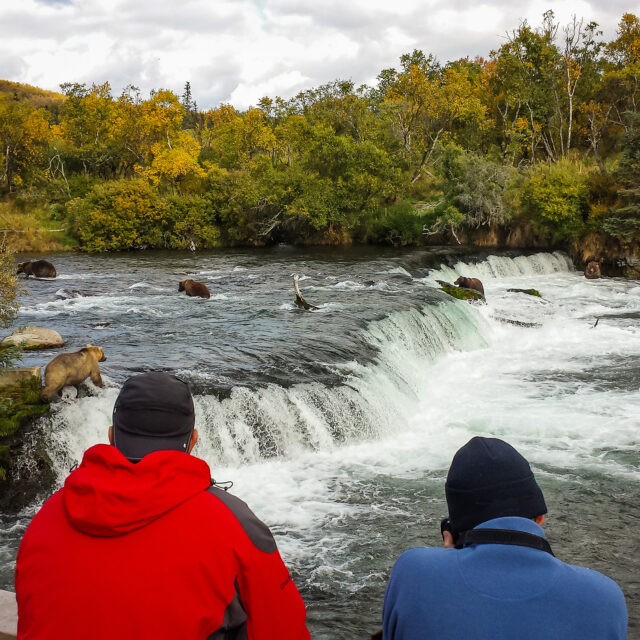
Lodge
king salmon, Alaska
Brooks Lodge
4(239 · TripAdvisor)
Est. 1950
salmon
2-night minimum
Elevated bear-viewing platformsGuided bear viewingFly fishing on Brooks RiverLake fishing on Brooks and Naknek…+4 more
From $850/person
View full details →Species Guide
The staging town for Alaska Peninsula brown bear country.
King Salmon is the air hub of the Alaska Peninsula, and for bear hunters it's where a Unit 9 brown bear hunt begins. You land on the commercial flight, meet your outfitter, and load into a bush plane for camp; one established outfit's main camp sits about an hour and a half by air south of town. The Peninsula's salmon-rich streams grow some of the largest brown bears anywhere, and hunts concentrate on the low country along rivers full of returning sockeye and silvers.
One thing to be clear on up front: nonresidents cannot hunt brown bear in Alaska on their own. You must be personally accompanied by an Alaska-licensed guide, or by an Alaska resident age 19 or older within the second degree of kindred. That rule, plus bush-plane logistics, makes this a booked-well-in-advance, guided expedition, not a DIY trip.
Unit 9 covers the Alaska Peninsula, and it's managed deliberately for trophy quality. Recent regulations run an alternating rotation: a fall season in odd-numbered years, a spring season in even-numbered years, and a bag limit of one brown bear every four regulatory years. Confirm current seasons and permit and drawing requirements with ADF&G before planning, since the structure carries details this page can't.
There's a distinction worth understanding between hunting country and park country. King Salmon is also the gateway to Katmai's bear-viewing, and the national park itself is closed to sport hunting; guided hunts operate on lands outside the park. Outfitters based around King Salmon run both kinds of trips, so make sure you're talking to the right kind of operator.
Under the recent structure, the spring season has run May 10–31 in even years, offering fifteen-plus hours of daylight and bears fresh out of dens. The fall season has run October 1–25 in odd years, when bears pack onto salmon streams putting on fat. Outfitters report typical mature boars squaring 8 to 10 feet, with many hunts producing bears of 9 feet or better.
Because the unit opens only in alternating years, serious hunters book one to two years ahead, sometimes further out for prime spring dates. The weather is classic Peninsula: wind and rain can ground planes and stall hunts, which is why well-run hunts run ten days or more.
Expect a 10-day guided hunt from a tent camp, cabin base camp, or boat, with spot-and-stalk hunting along salmon streams and tundra edges. Published outfitter pricing for Peninsula brown bear runs roughly $27,500 for tent-camp hunts to $35,000 for boat-based hunts, with other outfits in the $29,500 range. That's before airfare to King Salmon, and before the nonresident hunting license (recently $160) and brown bear tag (recently $1,000); confirm current license and tag fees with ADF&G.
Physical demands vary by camp style, but everything on the Peninsula is weather-dependent. Plan to use every layer you own; the climate does not reward anyone who shows up dressed for a dry one.
| Period | What's happening | Notes |
|---|---|---|
| May 10 – 31, even years | Spring season: bears emerging from dens, long daylight | Prime spring dates book out first |
| Oct 1 – 25, odd years | Fall season: bears concentrated on salmon streams | Prime coats; fast-changing weather |
| Off years | No general season in the rotation: the unit rests | Book 1–2 years ahead around the cycle |
| Any year | Katmai National Park closed to sport hunting | Hunts run on lands outside the park; viewing trips are a separate industry |
Seasons and limits change — always confirm current regulations with ADF&G before booking.
Yes, if you're a nonresident. Alaska law requires nonresidents hunting brown/grizzly bear to be personally accompanied by an Alaska-licensed guide or by an Alaska resident age 19+ within the second degree of kindred. Residents can hunt unguided under the same seasons and limits.
Published outfitter rates for 10-day Unit 9 hunts run roughly $27,500 (tent camp) to $35,000 (boat-based), with others around $29,500. Add the nonresident license (recently $160), brown bear tag (recently $1,000), airfare to King Salmon, and post-hunt costs. Confirm current fees with ADF&G.
Unit 9 has run on an alternating rotation: spring seasons (May 10–31) in even-numbered years and fall seasons (October 1–25) in odd-numbered years, with a limit of one brown bear every four regulatory years. Verify current seasons and permit requirements with ADF&G.
The Peninsula's salmon diet grows exceptionally large bears. Outfitters report mature boars squaring 8 to 10 feet, with well-run hunts regularly taking bears of 9 feet or better. No hunt guarantees a bear of any size.
king salmon, Alaska
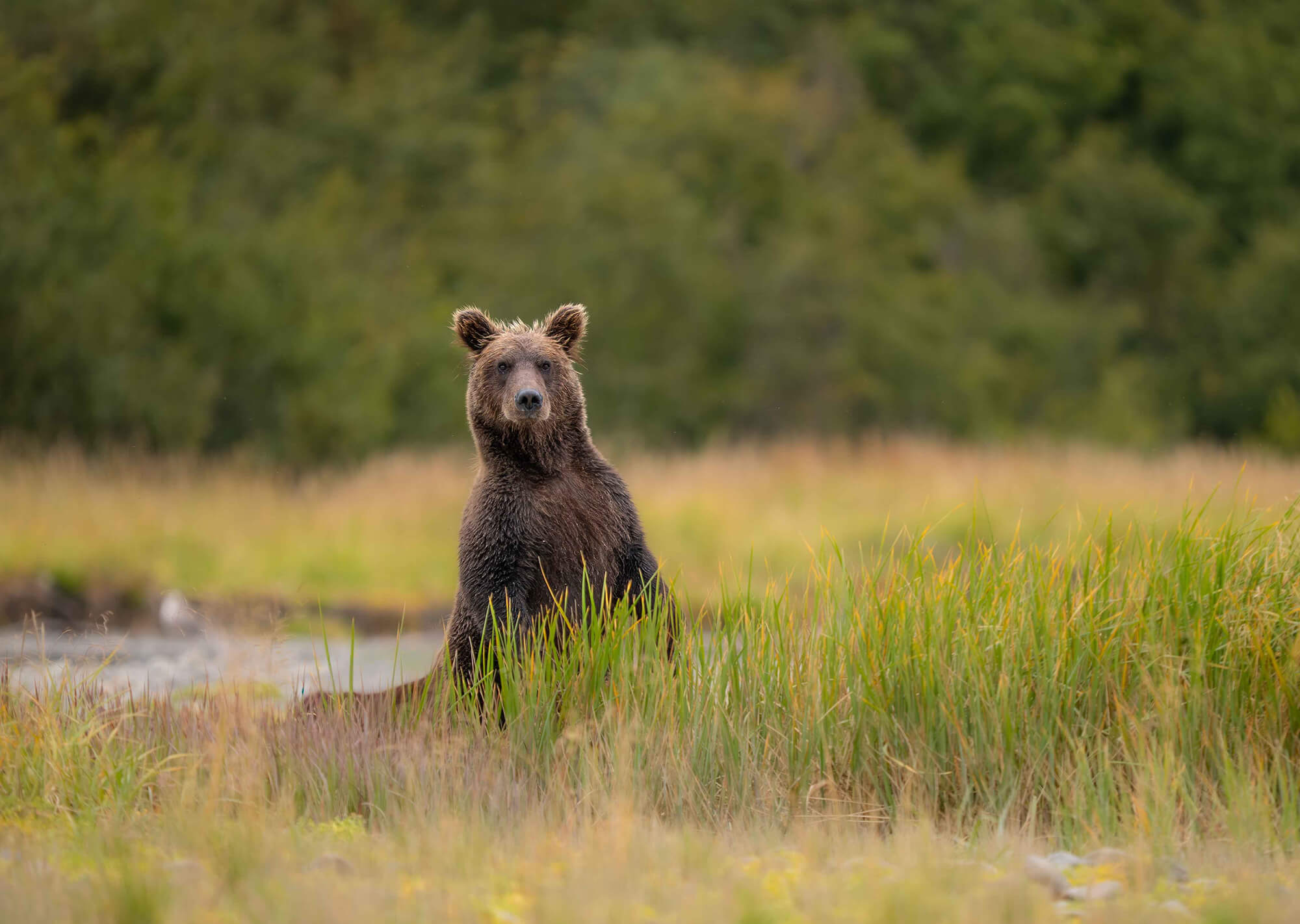
king salmon, Alaska
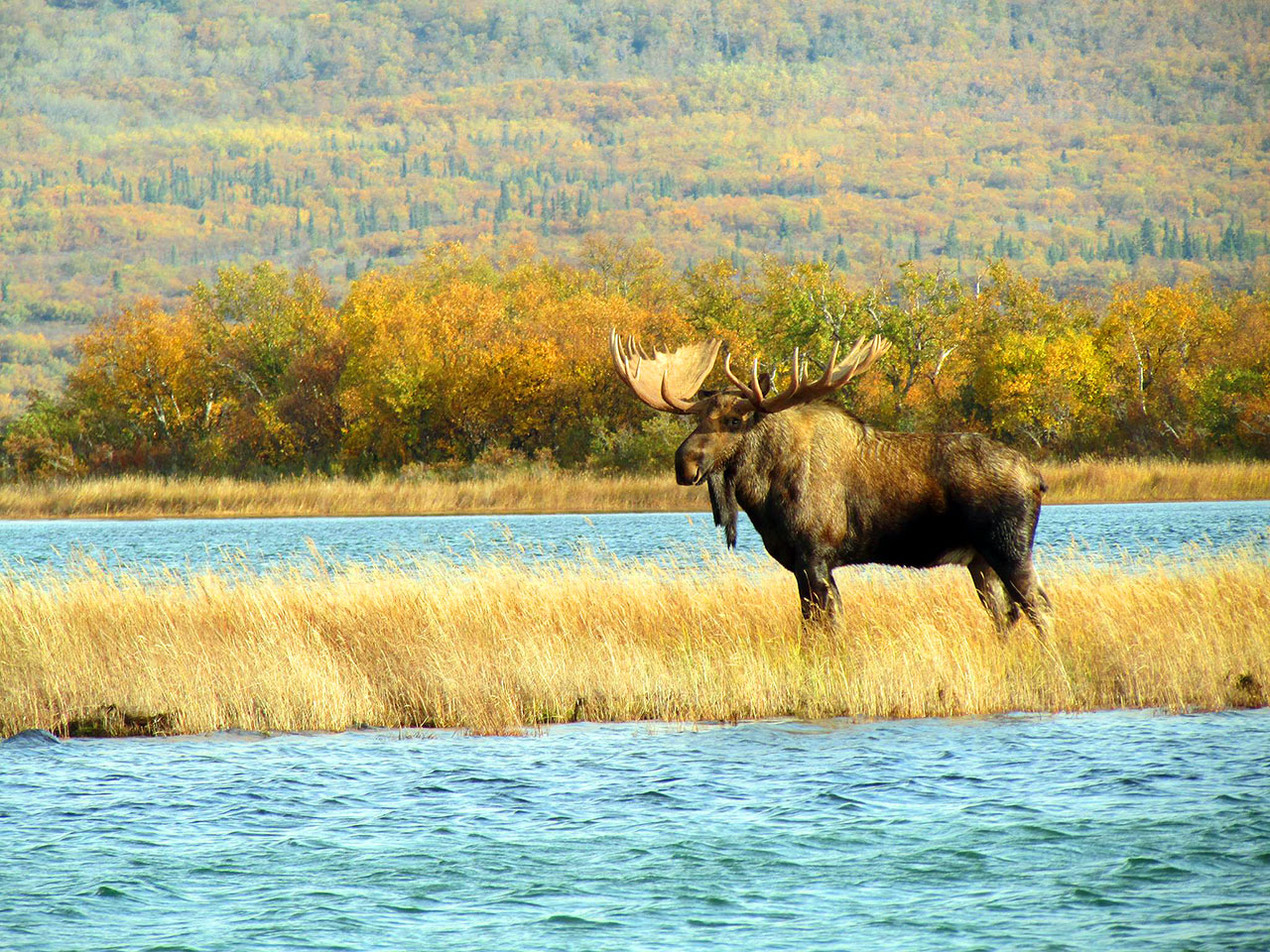
king salmon, Alaska