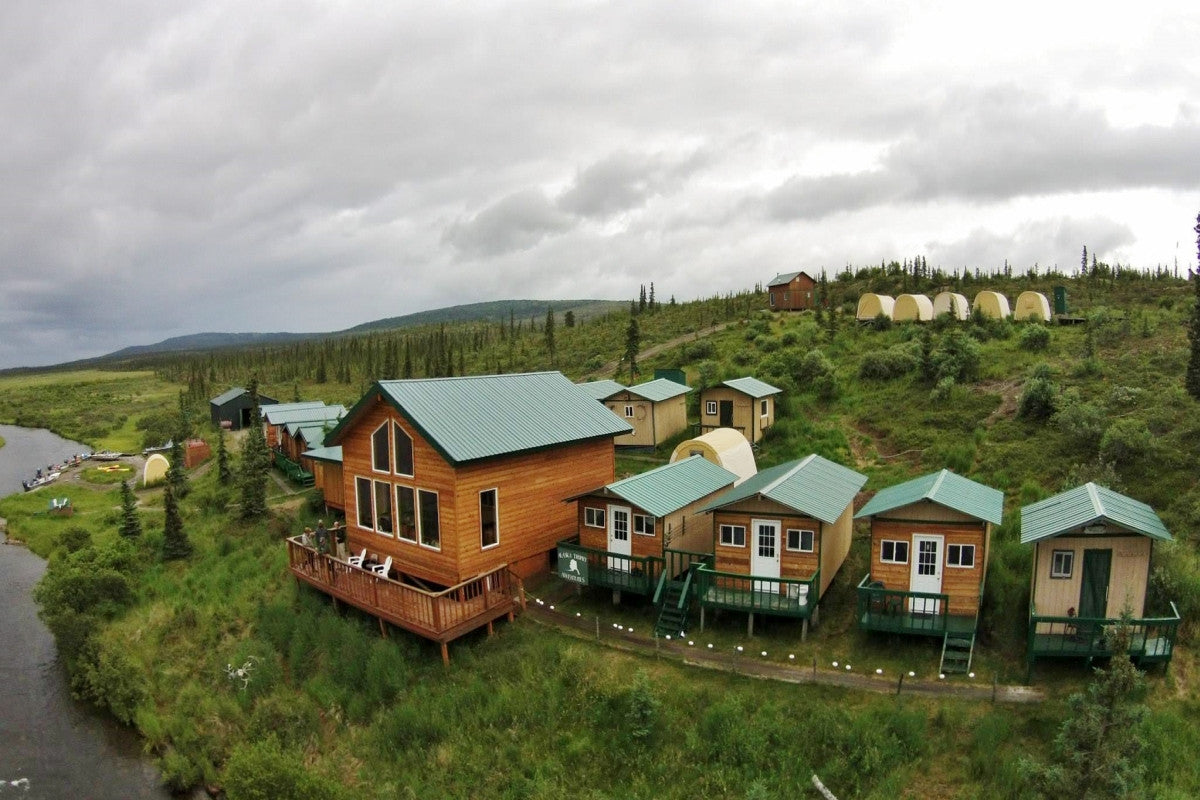
Lodge
king salmon, Alaska
Alaska Trophy Adventures Lodge (ATA)
5(333 · TripAdvisor)
Town Guide
Bristol Bay's fly-in hub: the Naknek River out the front door, Katmai country out the back.
King Salmon sits on the Naknek River in southwest Alaska's Bristol Bay region, about 280 air miles from Anchorage. There's no road connection to the rest of the state, so everyone arrives by plane, and the town works as a staging point three ways at once: sport fishing on the Naknek system, bear viewing in neighboring Katmai National Park and Preserve, and fall big-game hunts on the Alaska Peninsula.
The fishing is the anchor. ADF&G describes the Naknek as receiving the highest sport-angler effort of any river in southwest Alaska, driven by strong salmon runs (kings, sockeye, coho, chums, and even-year pinks) plus rainbow trout that can top 30 inches and 10 pounds. Recent sockeye escapements have run over two million fish into the system.
Most operators here are lodges rather than day-trip charters, typically selling multi-day packages that bundle lodging, meals, guided river time, and often floatplane fly-outs. Visitor services in King Salmon and nearby Naknek are limited, so book where you'll sleep before you book anything else.
| Species | Prime Months | Notes |
|---|---|---|
| King (Chinook) salmon | Jun–Jul | One of southwest Alaska's larger king sport fisheries: roughly 28% of Bristol Bay's sport-harvested kings come from the Naknek. Most anglers backtroll plugs or troll big spinners in the tidal 12-mile stretch near town. Unbaited artificial lures only; a king stamp and harvest record may be required. |
| Sockeye (red) salmon | Late Jun–Jul | Large run, peaking near July 4. Most fishing is upstream of Rapids Camp with medium-sized flies. Brooks River is popular too, but the National Park Service has special rules there. |
| Coho (silver) salmon | Late Jul–Sep | Strong numbers; the historical best window is around August 7–21, fishing spinners, flies, or jigs from boats between Paul's Creek and Naknek Lake. |
| Chum and pink salmon | Late Jun–Aug | Chums fish best in early August. Pinks show in numbers on even-numbered years. Less targeted, but action can be excellent with the same gear used for silvers. |
| Rainbow trout | Mar–Apr 9, Jun–Oct | The Naknek's signature resident fish, with trout over 30 inches and 10 pounds caught here. Managed under long-standing special regulations to protect large fish. |
| Arctic grayling and Dolly Varden | Jun–Sep | Present in Paul's Creek and King Salmon Creek along the local road system, one of the few fisheries here you can reach without a boat or plane. |
| Lake trout, Arctic char, northern pike | Jun–Sep | Naknek Lake fishes well for all three, best toward the eastern end near Bay of Islands, trolling spoons and spinners from boats. |
| Brown bear, moose, caribou (hunting) | Fall seasons | Unit 9 is famous brown bear country; nonresidents must hunt brown bear with a registered guide (or an Alaska-resident relative). Moose does not require a guide, but nonresident moose hunters must complete ADF&G's orientation course. Caribou opportunity varies year to year. |
Seasons and limits change — always confirm current regulations with ADF&G before booking.
This is lodge country. Most of King Salmon's operators are fishing or hunting lodges selling multi-day, all-inclusive stays rather than single-day charters, and many add floatplane fly-outs to remote creeks and lakes. The Naknek system is big water made up of large lakes and connected rivers, so a boat or floatplane is necessary for much of the fishing: guided boats work the main stem near town, while fly-outs reach the rest.
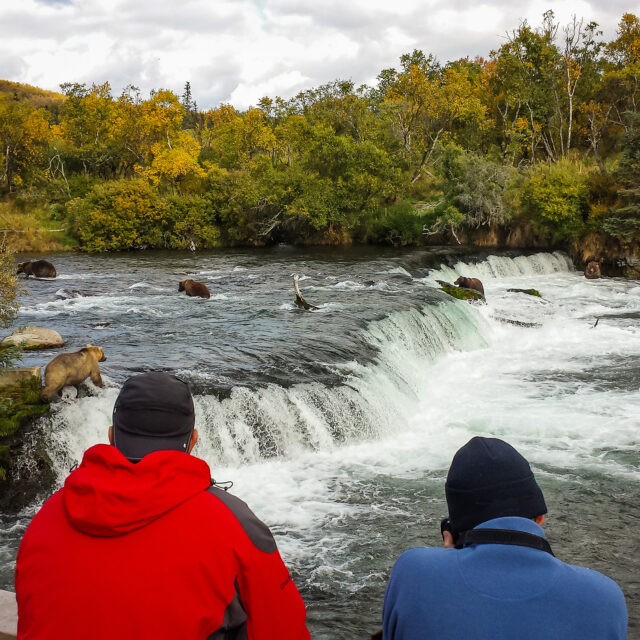
For Katmai, operators and air taxis run day trips from King Salmon to Brooks Camp, about a 25-minute floatplane hop or a boat/water-taxi ride, where brown bears gather on the Brooks River. Day-trip airfare in the neighborhood of $500 round trip per person has been typical; confirm current pricing. Hunting outfitters stage fall brown bear, moose, and caribou hunts from town, usually flying clients to spike camps on the Peninsula.
There is no road or ferry to King Salmon; you fly. Alaska Airlines runs scheduled service from Anchorage (roughly an hour in the air), and regional carriers like Katmai Air and Ravn Alaska also serve the route; round-trip fares around $500 are common but vary by date. From the airport, lodges typically handle ground and river transfers. Nearby Naknek, at the river's mouth, is connected to King Salmon by a short local road.
By air only. Alaska Airlines flies scheduled service from Anchorage, about an hour each way, and regional operators like Katmai Air also serve the route. There is no road or ferry connection to the rest of Alaska.
Yes. Nonresident Alaska licenses are $30 for a day or $145 for the year, and if you fish for king salmon you'll also need a King Salmon Stamp, which is extra and sold by duration. Buy both before arriving, since local vendors can sell out.
For brown bear, yes: nonresidents must hunt brown/grizzly bear with a registered Alaska guide or an Alaska-resident close relative. Moose and caribou don't require a guide for U.S. nonresidents, though nonresident moose hunters must complete ADF&G's moose hunter orientation, and most hunters here use outfitters anyway because access is fly-in.
Yes. King Salmon is the standard jumping-off point for Brooks Camp in Katmai National Park, about 25 minutes by floatplane or reachable by boat. July is the classic month for bears on the falls. Book flights and any lodge or campsite well in advance.
Depends on the target: kings peak roughly late June to mid-July (season closes July 31), sockeye peak around July 4, silvers around mid-August, and the trophy rainbow windows are spring ice-out, the June–July smolt run, and August–October.
king salmon, Alaska

king salmon, Alaska
All-inclusive Alagnak River fishing lodge running salmon, char, and trout trips with bear viewing since 1979.
king salmon, Alaska