Lodge
dillingham, Alaska
Bristol Bay Lodge
4.9(65 · TripAdvisor)
Est. 1972
salmontrout
4-night minimum
5 floatplanes on property40+ remote river access pointsFounded 1972Guided daily fly-outs+3 more
$6,500–$9,500/person
View full details →Town Guide
Bristol Bay's western hub: Nushagak kings, fly-out lodges, and the largest state park in America next door.
Dillingham is a town of roughly 2,200 people on Nushagak Bay in southwest Alaska, about 330 air miles from Anchorage. It sits off the road system entirely, so you fly in, and it serves as the western hub for Bristol Bay, the region behind the world's largest sockeye salmon runs. Immediately north of town sits Wood-Tikchik State Park: 1.6 million acres of interconnected lakes and rivers, the largest state park in the United States.
The marquee sport fishery is the Nushagak River, which supports one of Alaska's largest king salmon runs; operators commonly cite returns in the range of 100,000 kings in good years. Kings enter the river in early June, and the sport season runs into late July, when king fishing closes by regulation across Bristol Bay waters (most of the Nushagak/Mulchatna drainage has closed around July 25).
Almost everything here is lodge- or camp-based rather than day-charter: riverside tent camps on the Nushagak for the June king rush, and fly-out lodges working the Wood-Tikchik lakes and surrounding rivers for salmon, trophy rainbows, and char. A handful of outfitters also run fall moose and brown bear hunts in the surrounding country.
| Species | Prime Months | Notes |
|---|---|---|
| King (Chinook) salmon | Jun–late Jul | The Nushagak's signature run, one of the largest king returns in Alaska, fished mostly from boats out of riverside camps. Season closes by regulation in late July; limits and emergency orders change annually. |
| Sockeye (red) salmon | Late Jun–Jul | Bristol Bay hosts the world's largest sockeye runs, and the Nushagak district is a major share of it. Bright, abundant fish in the lower rivers through July. |
| Coho (silver) salmon | Aug–Sep | Strong late-summer fishing in the Nushagak and Wood River systems as camps wind down from kings and sockeye. |
| Chum and pink salmon | Jun–Aug | Chums run through midsummer and fight hard; pinks show in numbers on even-numbered years. Both round out five-species salmon water. |
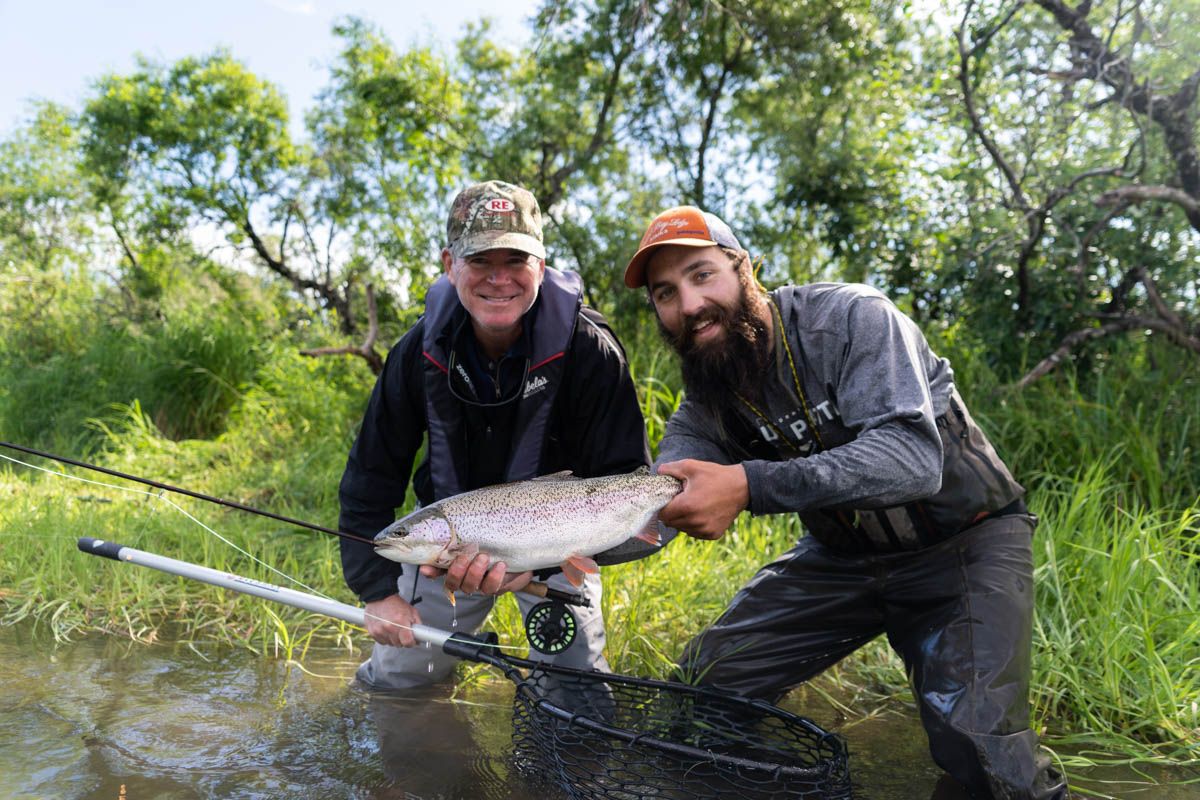
| Rainbow trout | Jun–Oct (best Aug–Sep) | Wild leopard-spotted rainbows in the Wood-Tikchik lakes and connecting rivers, best in late summer behind the spawning salmon. Conservative tackle and release practices are the norm. |
| Arctic char, Dolly Varden, grayling | Jun–Sep | Abundant through the park's lake-and-river chains; classic fly-out targets on lighter rods between salmon runs. |
| Moose (hunting) | Fall seasons | The main big-game hunt out of Dillingham (Unit 17), with populations near town reported over objective in recent surveys. No guide required for U.S. nonresidents, but nonresident moose hunters must complete ADF&G's orientation course; most hunters book transporters or outfitters for fly-in access. |
| Brown bear and caribou (hunting) | Varies | Brown bear hunts run in the surrounding region; nonresidents must hunt brown bear with a registered guide or an Alaska-resident relative. Mulchatna caribou hunting has been closed by state emergency order in recent years while the herd recovers. |
Seasons and limits change — always confirm current regulations with ADF&G before booking.
This is fly-in, package-trip country. For June kings, most anglers book a multi-day stay at a tent camp or lodge on the Nushagak. Packages typically bundle the floatplane or boat transfer from Dillingham, guided boats, meals, and lodging, and much of the productive river runs through Native corporation and private land where guided access is the practical option. For the Wood-Tikchik lakes and remote rivers, lodges run daily floatplane fly-outs or overnight spike camps; independent parties also stage float trips and park visits through local air taxis.
Hunts work the same way: outfitters and transporters fly clients from Dillingham to remote camps for fall moose and brown bear. Book far ahead, since camps and lodges sell out season slots, and floatplane capacity around town is finite in peak weeks.
There's no road to Dillingham. Scheduled commercial flights run daily from Anchorage (roughly an hour and a half in the air), and regional carriers such as Grant Aviation base aircraft in town for connections around Bristol Bay. From Dillingham, lodges and outfitters handle the last leg by floatplane or boat. Pack in soft-sided bags with strict weight discipline, since bush flights enforce baggage limits, and build a weather buffer into your itinerary, because fog and wind can hold flights.
Fly. Dillingham is off the road system; scheduled airlines connect it to Anchorage daily (about 330 air miles), and lodges arrange the onward floatplane or boat transfer. There is no ferry or highway option.
Kings enter the river in early June, with the strongest fishing typically mid-June through early July. King fishing closes by regulation in late July across Bristol Bay waters; most of the Nushagak drainage has closed around July 25 in recent years.
Yes. Nonresident licenses run $30/day or $145/annual, plus a King Salmon Stamp (extra, duration-based) if you're fishing for kings, which on the Nushagak in June you almost certainly are.
As of recent seasons, no: the Mulchatna caribou herd's entire range has been closed to hunting by state emergency order while the herd rebuilds from a steep decline.
For brown bear, yes: nonresidents must be accompanied by a registered guide or an Alaska-resident close relative. Moose does not require a guide for U.S. nonresidents, though you must complete ADF&G's nonresident moose hunter orientation, and fly-in access means most hunters use a transporter or outfitter anyway.
dillingham, Alaska

dillingham, Alaska

dillingham, Alaska