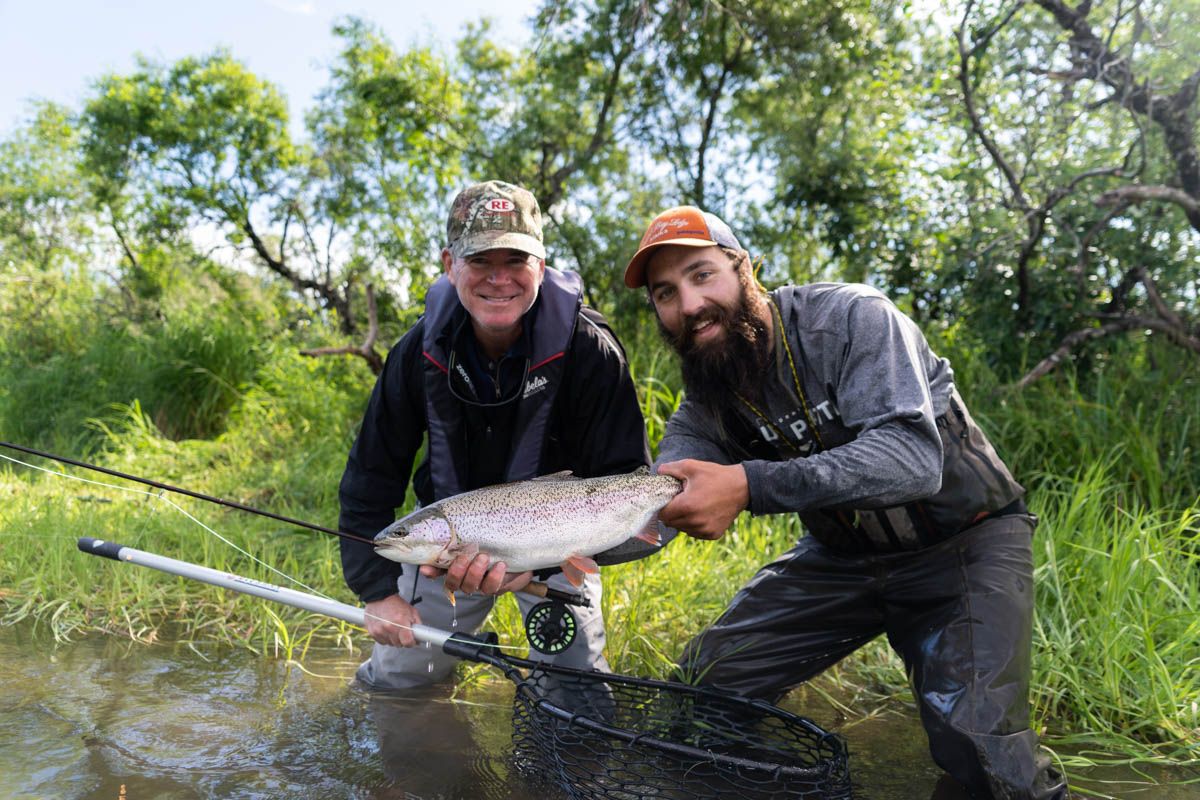
Lodge
dillingham, Alaska
Bristol Bay Lodge
4.9(65 · TripAdvisor)
Est. 1972
salmontrout
4-night minimum
5 floatplanes on property40+ remote river access pointsFounded 1972Guided daily fly-outs+3 more
$6,500–$9,500/person
View full details →Species Guide
The jumping-off point for Bristol Bay — the world's largest sockeye run and the Nushagak king fishery
Dillingham isn't a place you fish from a dock. It's the air hub for Bristol Bay, the region ADF&G describes as the world's largest producer of sockeye salmon. From the Dillingham airport, floatplanes fan out to camps and lodges on the Nushagak River and up into the Wood River and Tikchik lake systems. All five Pacific salmon (king, sockeye, chum, pink, and coho) return to these drainages, along with wild rainbow trout, Arctic grayling, char, and pike.
The headline fishery is the Nushagak king salmon run. The lower river hosts one of Alaska's better-known Chinook sport fisheries, with tent camps and lodges lining the banks during the mid-June to July peak. If your dates run later, the coho fishing from late July through September is strong, and the trout and grayling fishing in the Wood-Tikchik country holds up all season.
Everything here is remote. There is no road to Dillingham; you fly in from Anchorage, and your operator flies or boats you the rest of the way. On the Nushagak, guides fish from powerboats in the lower river, back-trolling or drifting bait and lures for kings and swinging gear for whatever else is in. The sockeye run is enormous. The Nushagak's escapement goal is often met within the first week, and while sockeye are reluctant biters, camps fish them effectively in-river during the late-June push.
The operators based out of Dillingham split into two styles: seasonal salmon camps on the Nushagak itself, built around the king run, and full-service fly-out lodges in the Wood-Tikchik lakes region that mix salmon with trophy rainbow trout, grayling, and char, moving anglers by floatplane to a different water most days.
Kings enter the Nushagak in early June, with the sport fishery peaking from roughly June 15 through early July and good fishing in the lower river into late July. King season in the drainage runs May 1 to July 31, and portions of the Nushagak-Mulchatna system have closed to king fishing in late July in recent years. Bristol Bay king regulations change frequently. The Nushagak sockeye run builds around June 19 and lasts into mid-July, peaking late June to early July. Chums and pinks overlap the mid-summer window, and coho arrive from late July and fish well through September.
Bag limits in most Bristol Bay waters have been 5 salmon per day for sockeye, coho, chum, and pink, with king limits set separately and adjusted by emergency order. Treat all of these as changeable for the specific water you plan to fish.
This is package-trip country, not day-charter country. Nushagak king camps typically sell 4-night/5-day to week-long packages, with published rates in recent seasons roughly in the $3,500–$4,200 per person range including the floatplane from Dillingham, guided boats, tackle, meals, camp lodging, and fish processing. Confirm current rates and what's included when you book. Full-service fly-out lodges in the Wood-Tikchik area run substantially higher, reflecting daily floatplane time.
| Period | What's happening | Notes |
|---|---|---|
| Early June | First kings enter the Nushagak | Camps open; river still settling |
| June 15 – early July | Peak of the king run | The window the salmon camps are built around |
| Late June – mid-July | Sockeye run peaks | Massive numbers; escapement goals often met by late June |
| Mid–late July | Kings taper; chums and pinks in the mix | King season closes July 31; some waters close earlier |
| Late July – September | Coho run | Strong fishing into September; quieter camps, fewer crowds |
Seasons and limits change — always confirm current regulations with ADF&G before booking.
For kings, roughly June 15 through early July is the peak. Sockeye peak in late June to early July, and coho fish well from late July through September. There's no bad mid-summer week; each week just targets a different run.
Nushagak king camp packages have been advertised around $3,500–$4,200 per person for roughly 5 days, including the floatplane from Dillingham, guides, meals, and lodging. Fly-out lodges in the Wood-Tikchik region cost considerably more. Confirm current rates directly with operators.
It's difficult. Dillingham has no road connection to the rest of Alaska and the productive water is reached by boat or floatplane. A few local outfits offer day boats or unguided drop-offs, but most visiting anglers book a camp or lodge package.
Yes. In addition to a fishing license ($30/day or $145/year for nonresidents), you need a King Salmon Stamp to fish for kings. Buy both online before you travel. Bristol Bay king rules can change from year to year.
dillingham, Alaska

dillingham, Alaska

dillingham, Alaska