The Kenai River is the salmon water most visitors have heard of, and the town of Kenai sits right at its mouth. But anyone planning a trip needs the current picture, not the postcard: king salmon fishing on the Kenai is closed. ADF&G has shut down king fishing, including catch-and-release, for multiple consecutive seasons to protect collapsing returns, and for 2026 the closures cover both the early run (May 1–June 19) and the late run (June 20–August 15), plus nearby Cook Inlet salt waters. If an operator is selling you a Kenai king trip for this summer, ask hard questions.
Here's the good news: the Kenai's late-run sockeye return is one of the largest in the world, it peaks in mid-to-late July, and it is open, crowded, and genuinely productive. Add strong silver fishing in August and September, and the Kenai remains a serious salmon destination, just not for the species that built its reputation.
Sockeye by the million, then silvers
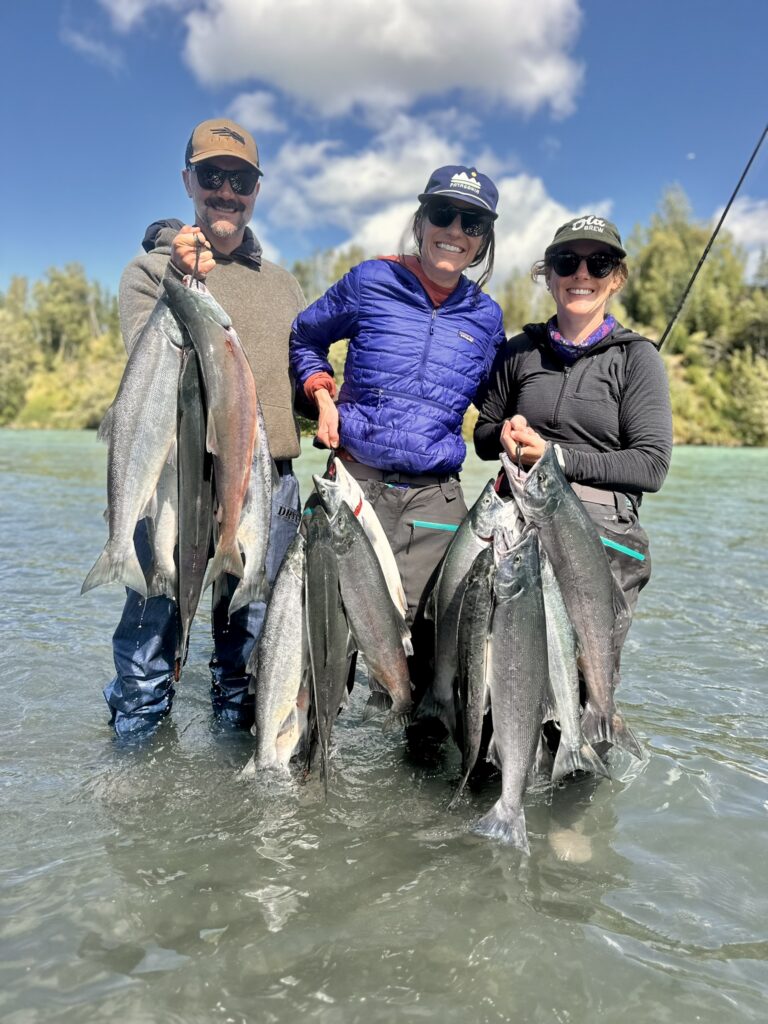
Sockeye are the volume fishery. Millions of reds push up the Kenai in July, and most are caught from the bank by 'flipping,' drifting a bare hook and yarn on a short line through traveling schools. It's shoulder-to-shoulder combat fishing at the crowded bank spots in peak weeks, and that's part of the experience. Guided boats help most by ferrying you to gravel bars and less-pressured water, and guides handle the technique coaching that makes the difference for first-timers.
Silvers take over in August: schools stack in the lower river, the stretch nearest the town of Kenai, and are fished from boats and bank alike. In even-numbered years, pink salmon also flood the river from mid-to-late July, offering easy action for kids. The Alaska Field Guide lists 15 salmon operators around Kenai, including Jimmie Jack's Alaska Fishing, Alaska Fish On Charters, King of the River, and Alaska River Adventures; note that fishing for open species continues under gear restrictions during the king closures, so check what your dates allow.
When the runs come through
Early-run sockeye enter from late May through June, mostly bound for the Russian River upstream. The main event is the late run: fish pass the river sonar from about July 1 to August 10, with peak fishing mid-to-late July. Silvers begin arriving as kings historically tapered off, mid-to-late July, and August is coho time, running into September.
Regulations on this river change constantly: bag limits on sockeye are adjusted in-season based on sonar counts, gear restrictions shift with the king closures, and emergency orders drop mid-summer. Read the current ADF&G emergency orders for the Kenai River before every trip, even if you fished it last year. Note too that the July dipnet fishery at the river mouth is personal-use, open to Alaska residents only.
Guided days and fishing on your own
A guided sockeye day typically means an early boat departure, a run to a gravel bar, and hands-on coaching until the flipping rhythm clicks; when the run is in, limits are common. Silver trips fish bait or lures from anchored or drifting boats in the lower river. Bank anglers can do well without a guide here, and none is required, but access, technique, and crowd management are what you're paying a guide for in peak weeks.
You'll need a nonresident license ($30/day, $145 annual). A King Salmon Stamp only matters if a king fishery is open, which currently it is not on the Kenai.